






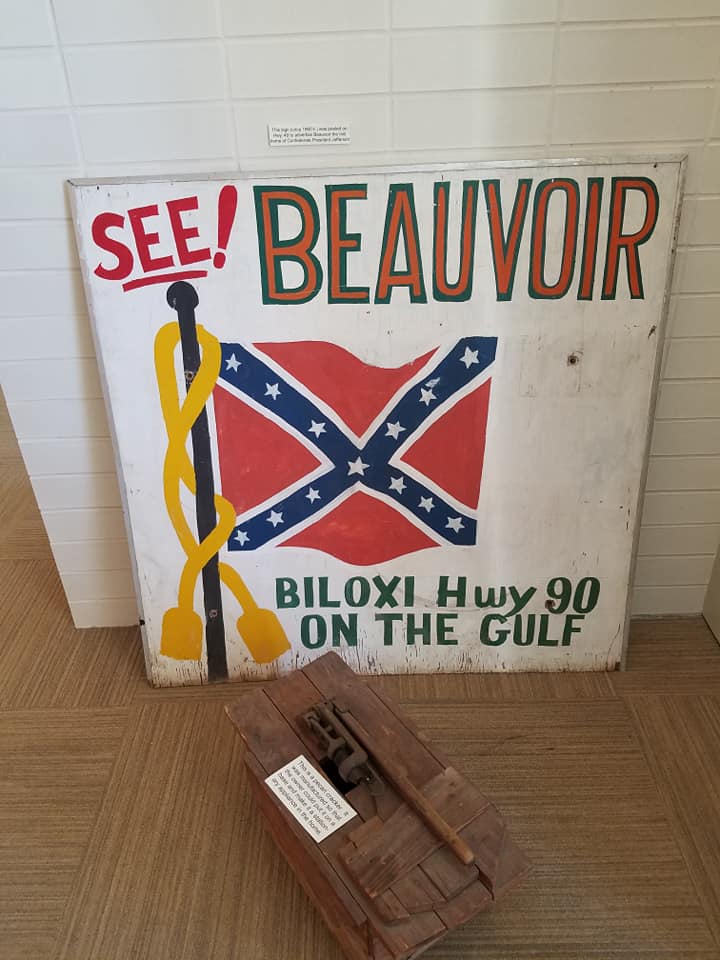
When I was a child in the South, places like Jefferson Davis’ retirement home Beauvoir in Biloxi were everywhere.
Only a few remain today. — Shrines to the Lost Cause. Monuments to the Confederacy. Centers that explained why our people lost the Civil War and with it, the entire basis of our regional economy for another century.
By the time I was about six, I learned to be especially careful in talking about how the Old South built its wealth. — Because it was necessary, I was taught, to portray slavery — the hereditary bondage of an entire race of people — as a nettlesome blemish mostly irrelevant to the discussion.
So my elders said.
The Moonlight and Magnolia tradition that embraced my entire family insisted that the men in grey had fought and died for something far nobler than slavery. It was a way of life they were protecting, my elders said. — States’ rights and snow-skinned women in hoop skirts whose honor was guarded from dark threats by an army of handsome white beaux and their ever-present guns.
Many here viewed this dreamlike tradition as a promise. An entitlement. Something they were owed.
But it was an unreal dream from the start — one that only found semblances of reality in fictions like Gone with the Wind. The actual world I saw around me in the South never matched these honeysuckle illusions, which hid poverty, unmet expectations, and deep historical resentments.
In this way, denial was elevated to an art form in the South. And it was an attitude that has spread throughout the nation over time.
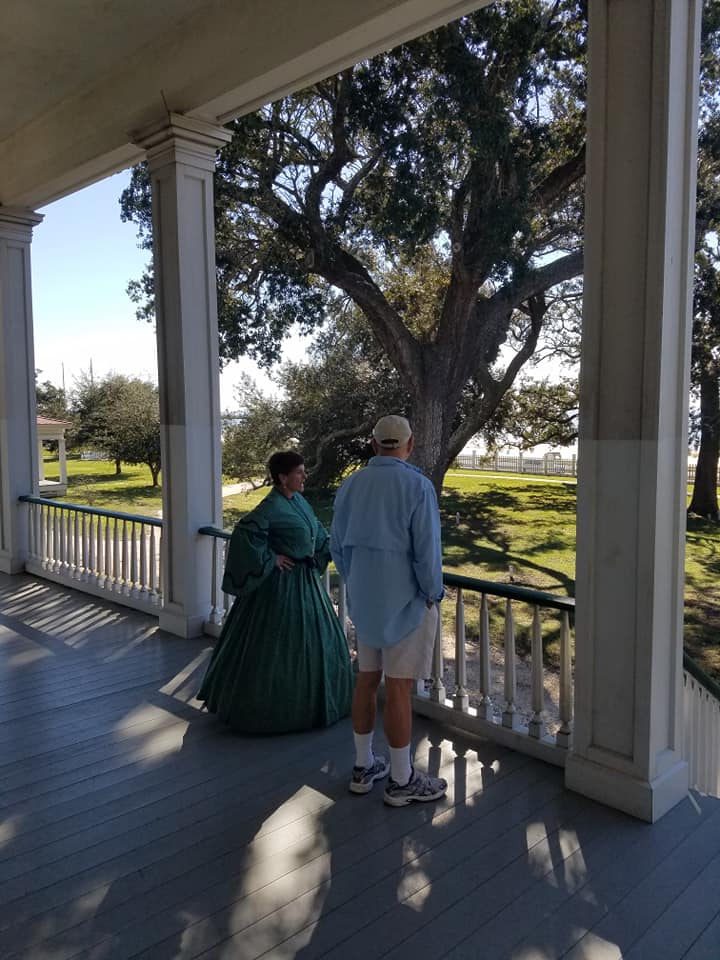
Beauvoir here in Mississippi is a monument to this same denial. A shrine tended by hoop-skirted women. A center to preserve the legend of something that never really existed.
What remains of the legend today? — Does the same denial continue here and now, in the Twenty-First Century?
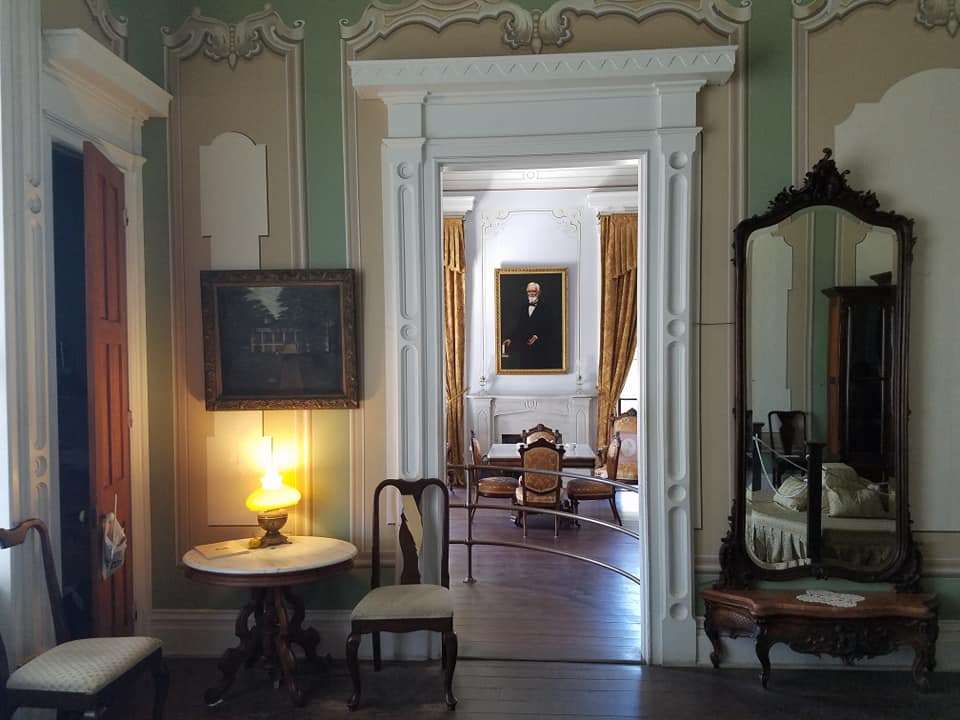
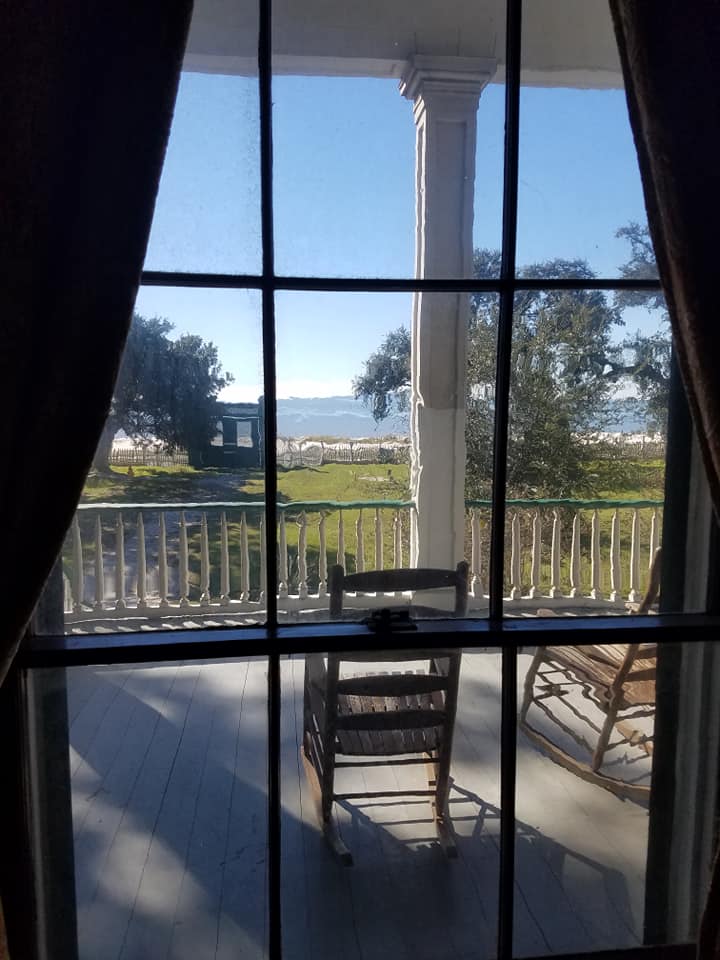
Jim and I visited Beauvoir yesterday with that question in mind.
We left on our trip to visit relatives here the same day a troubled man opened fire in a small yoga studio in an upscale neighbor not far from where we live in Tallahassee. He killed two women. News reports now say he identified with the online “incel” movement — misogynist men who say they are “involuntary celibates.” — Men who think they are not getting what is their due, their dreamed-of entitlement.
Our visit was only a week after another man gunned down 11 people at a Pittsburgh synagogue because he felt they were somehow financing a brown-skinned horde sweeping up from Latin nations. — “Invaders,” he ranted, that were out to “kill our people.”
Angry, resentful white men with guns. — Today’s very real and very frightening caricature of the white knights of the imaginary past.
Our tour guide yesterday never mentioned guns, just as she never mentioned slavery or the roughly 620,000 Americans who died in the Civil War.
To the contrary, our trip through Jefferson Davis’ retirement home focused on the beautiful dream that had been built here on denial that hid its origins –denial of the labor forced from other human beings at gunpoint and under threat of the overseer’s lash.
Beautiful illusions and denial are twin sides of the same coin.
 Robert Craig Waters