




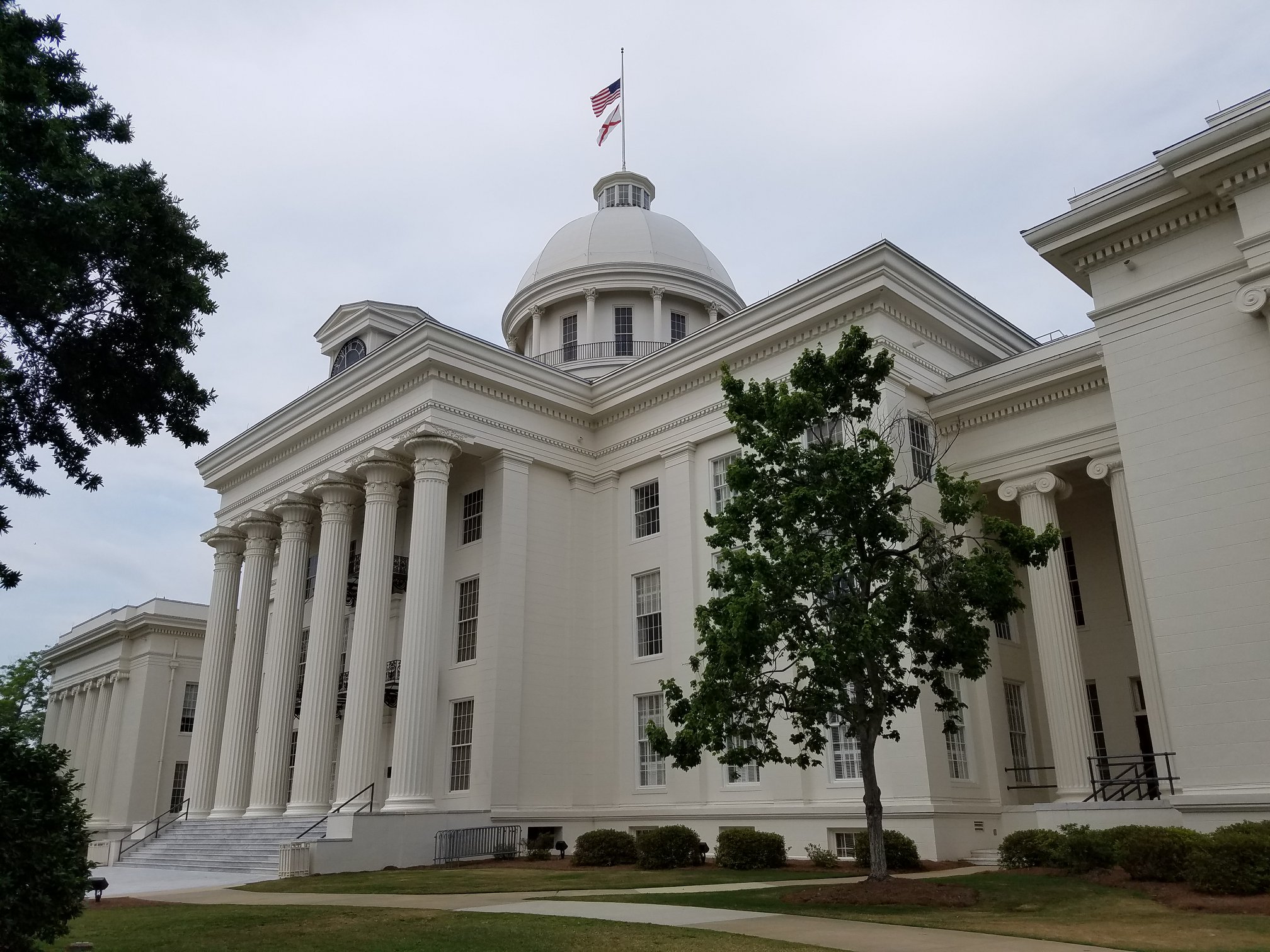
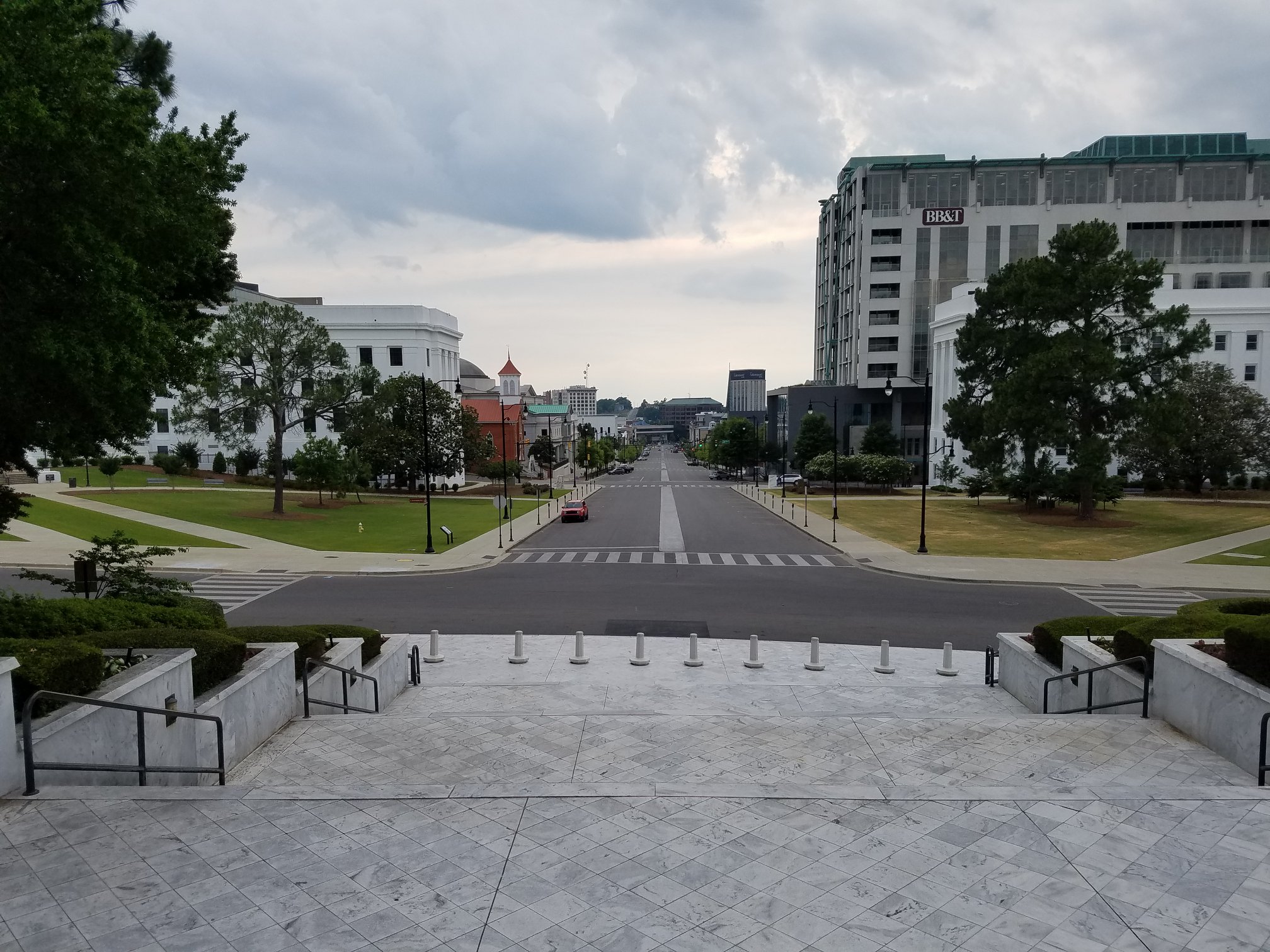
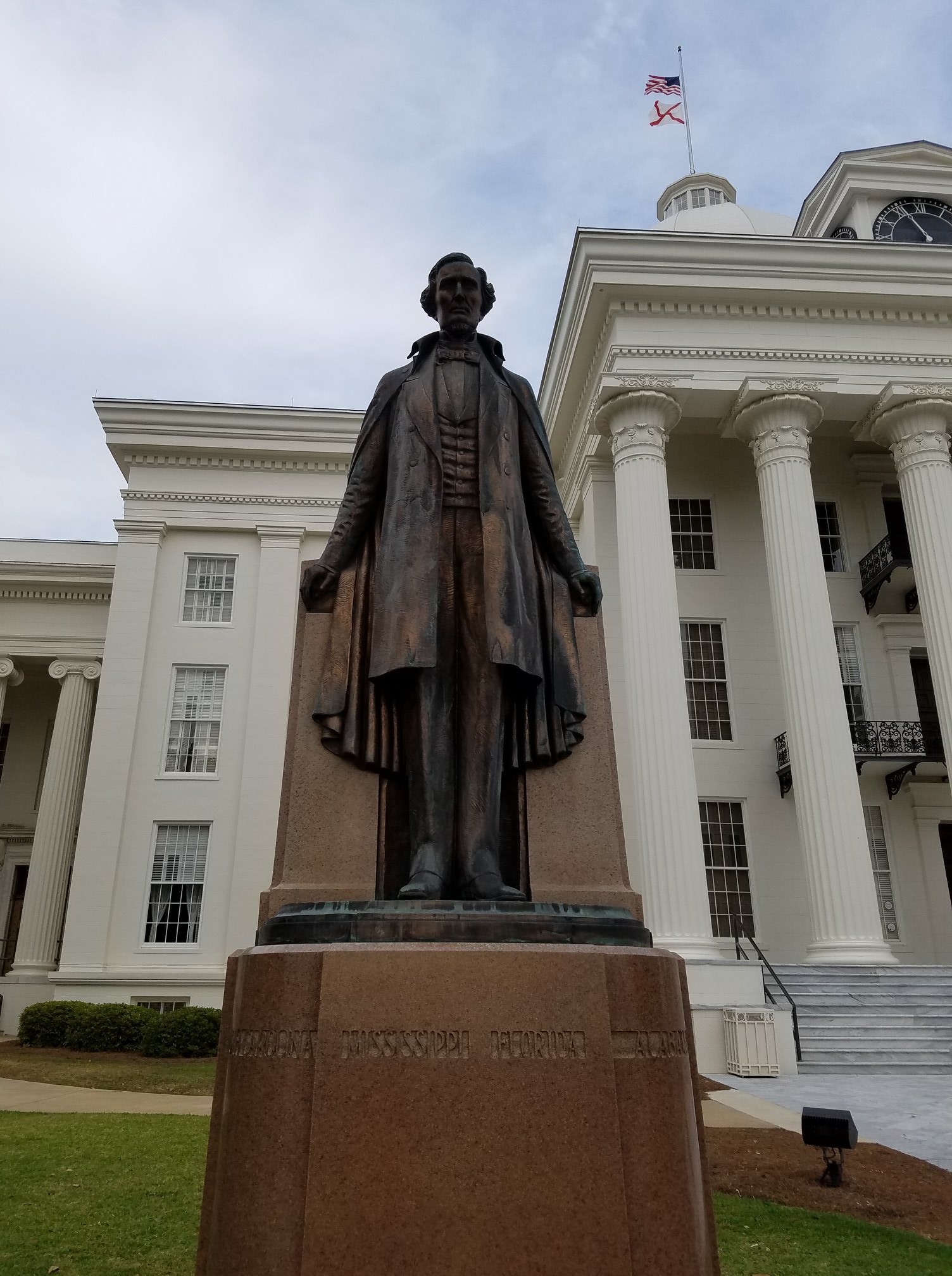




Look out from the capitol steps in Montgomery past the statesman statue of Jefferson Davis under its overhanging magnolia trees.
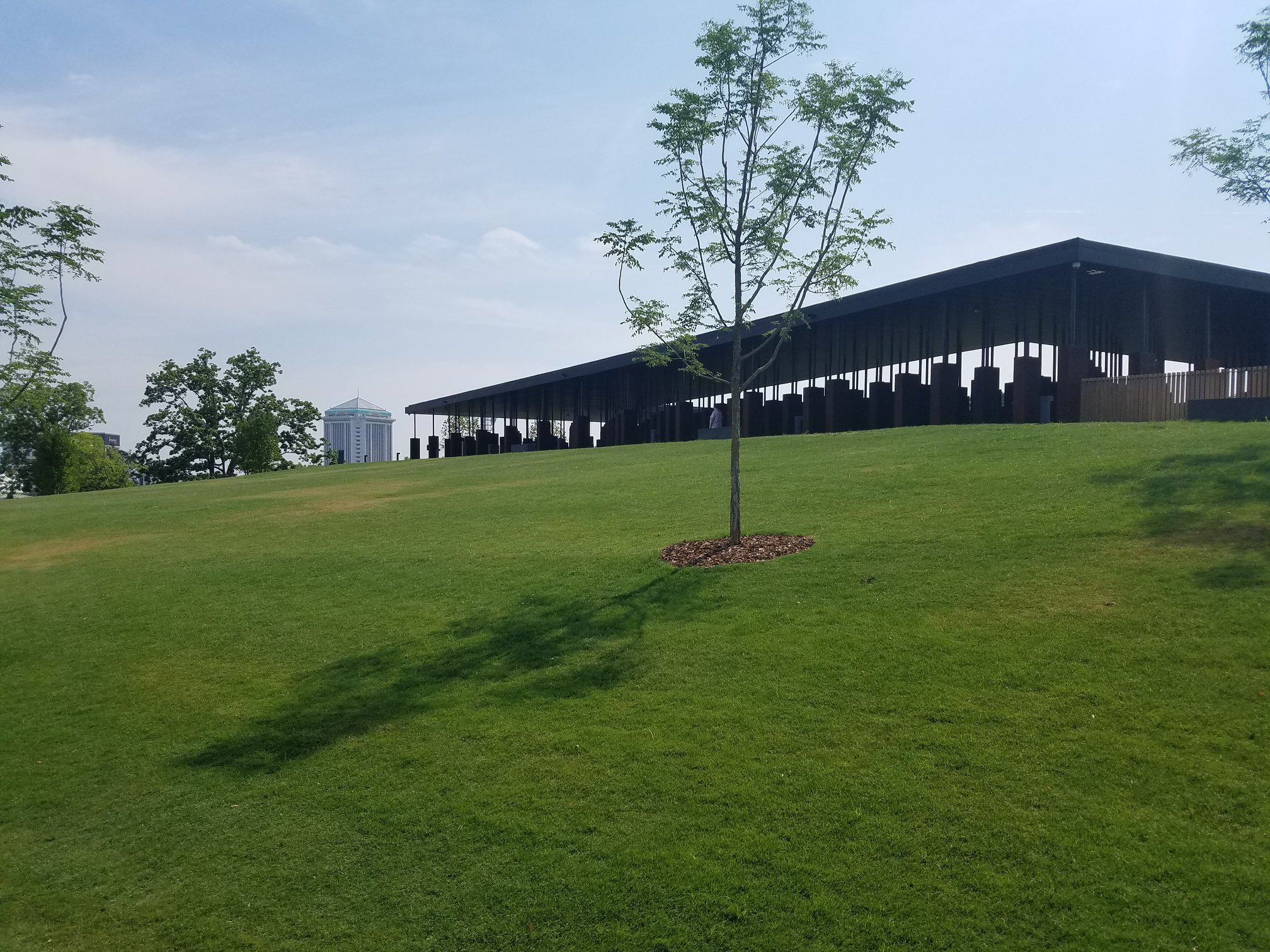
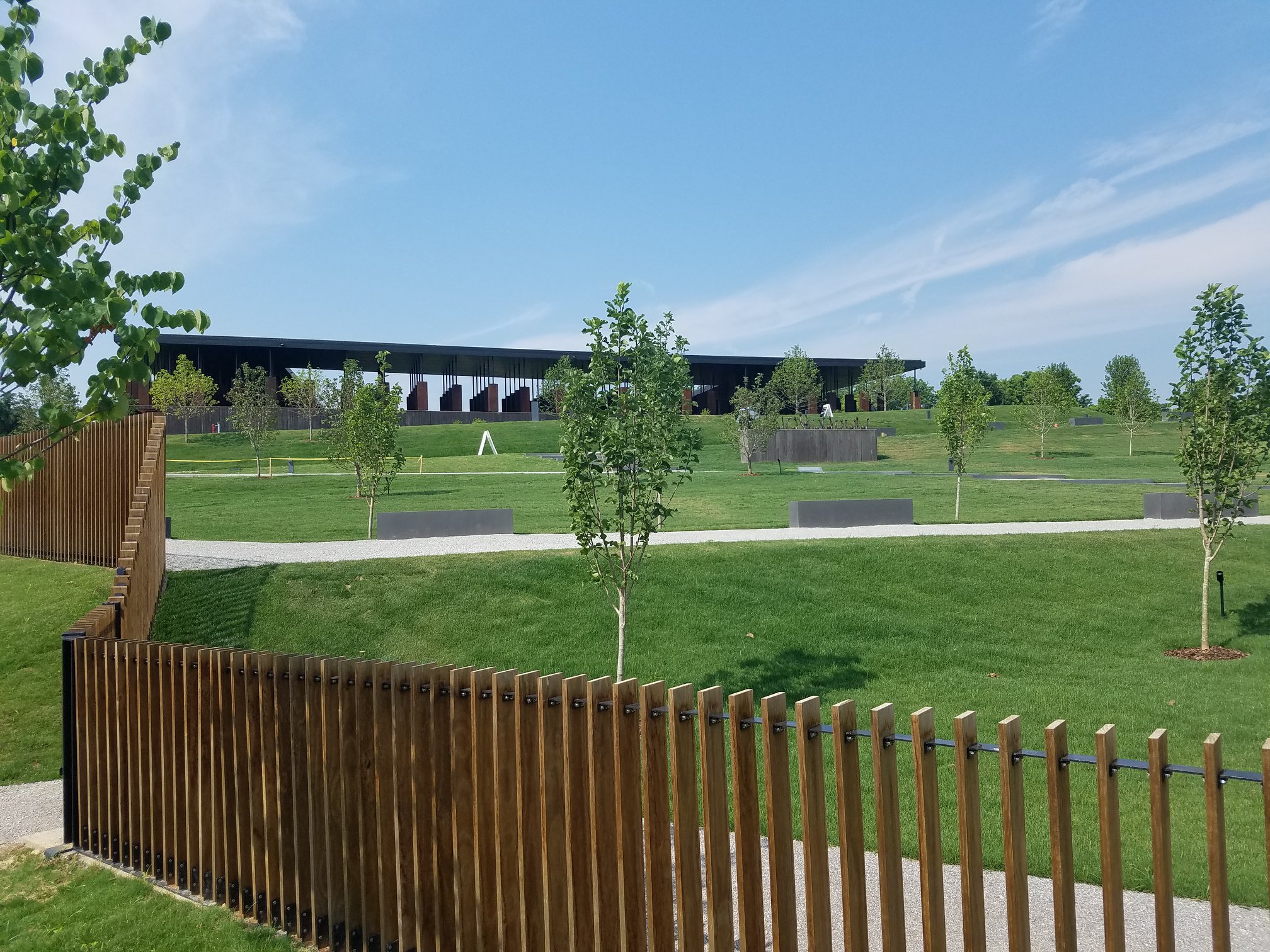
And there on the next hill over you will see blood-stained memories crafted into metal sculpture and left hanging there in the Southern breeze.
Sculpted memories of strange fruit swinging from distant trees.
Memories of lynchings.
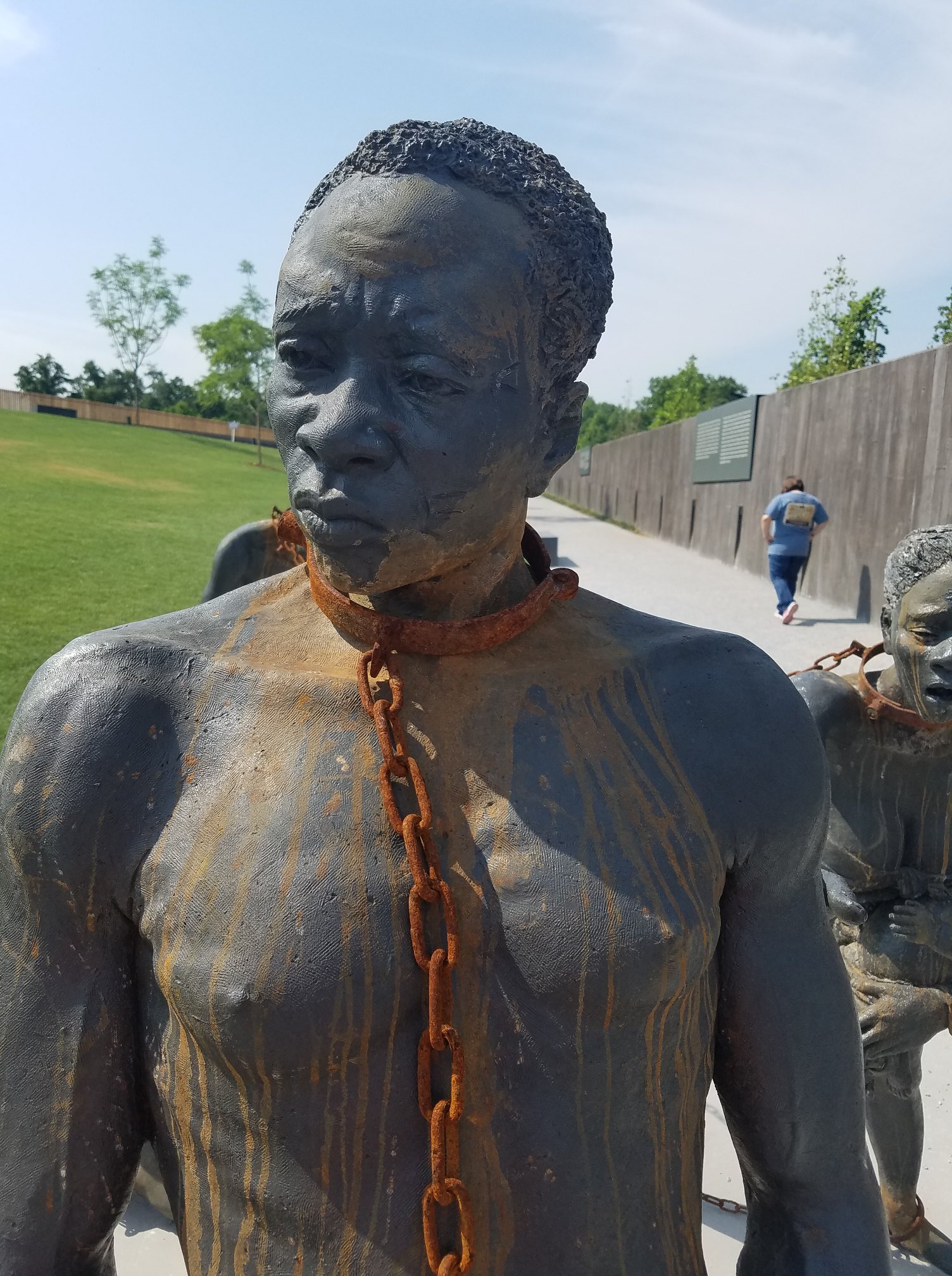
It is the National Memorial for Peace & Justice — a new outdoor museum that is a bold and moving statement about the nation’s greatest violation of human rights after slavery.
Thousands of Americans died by lynchings, immolations, drownings, and other forms of violence in a pattern of mob murders. This savagery blanketed the South in the late 1800s and well into the early 1900s but also killed people elsewhere in the United States.
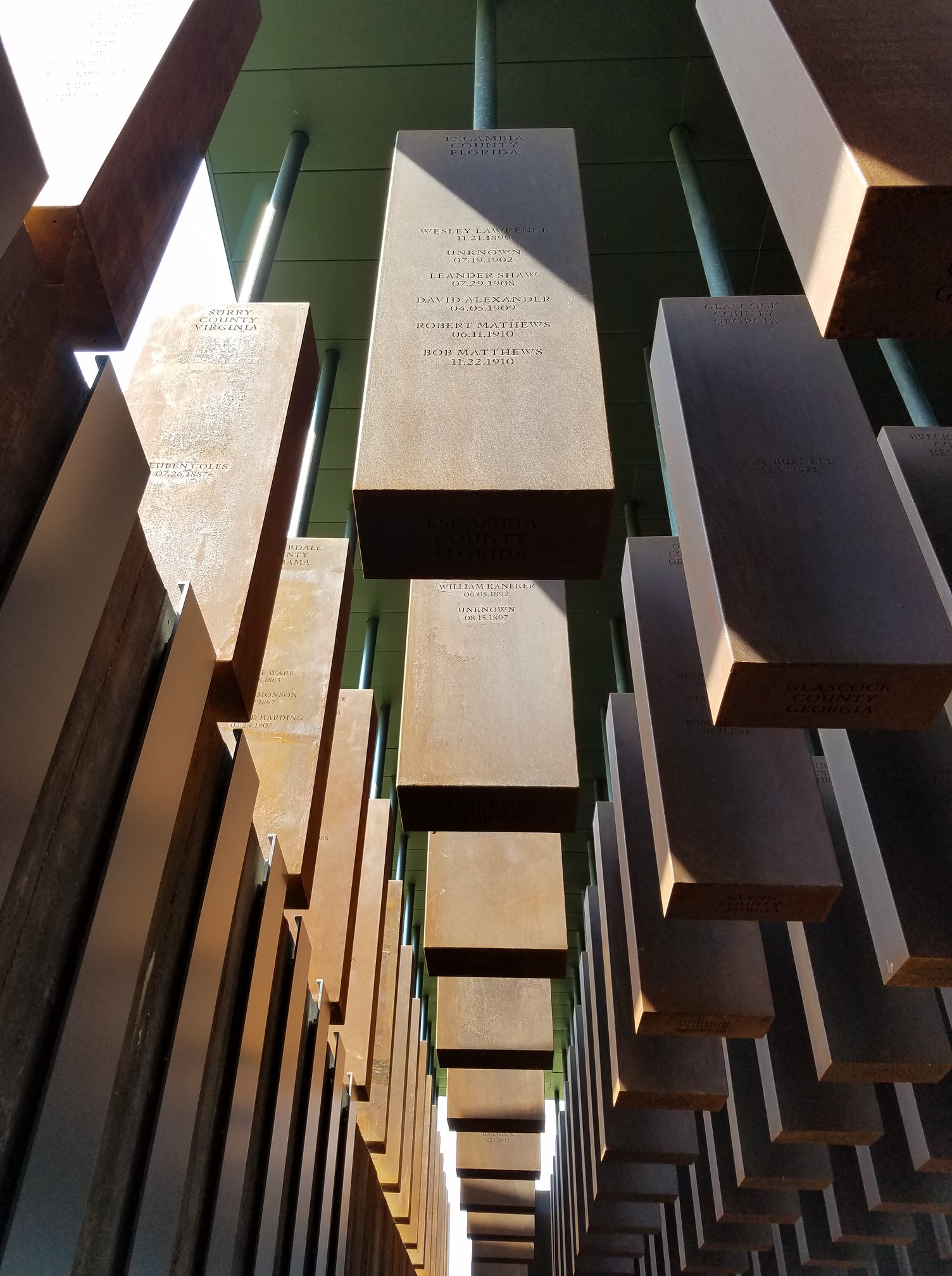
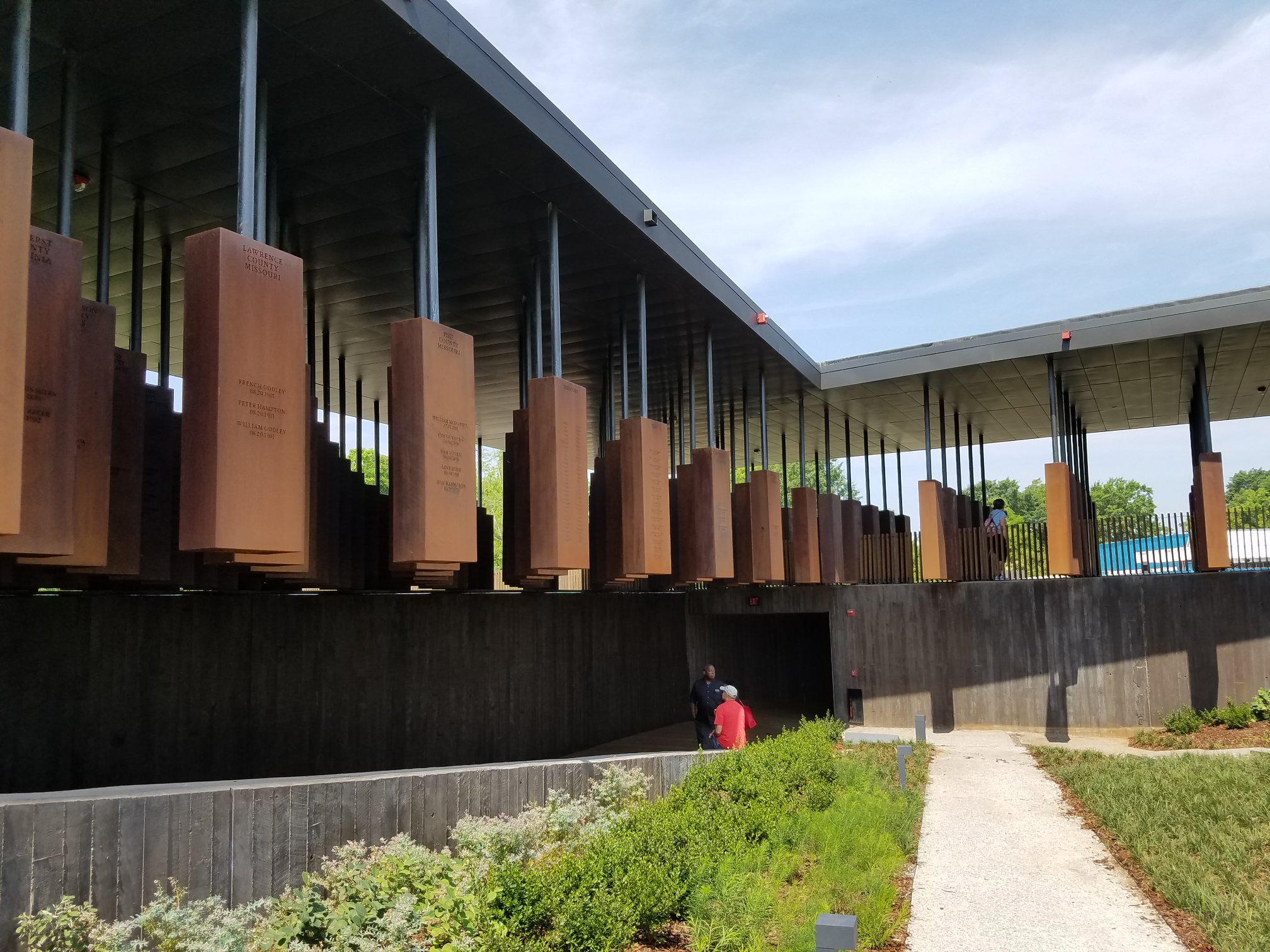
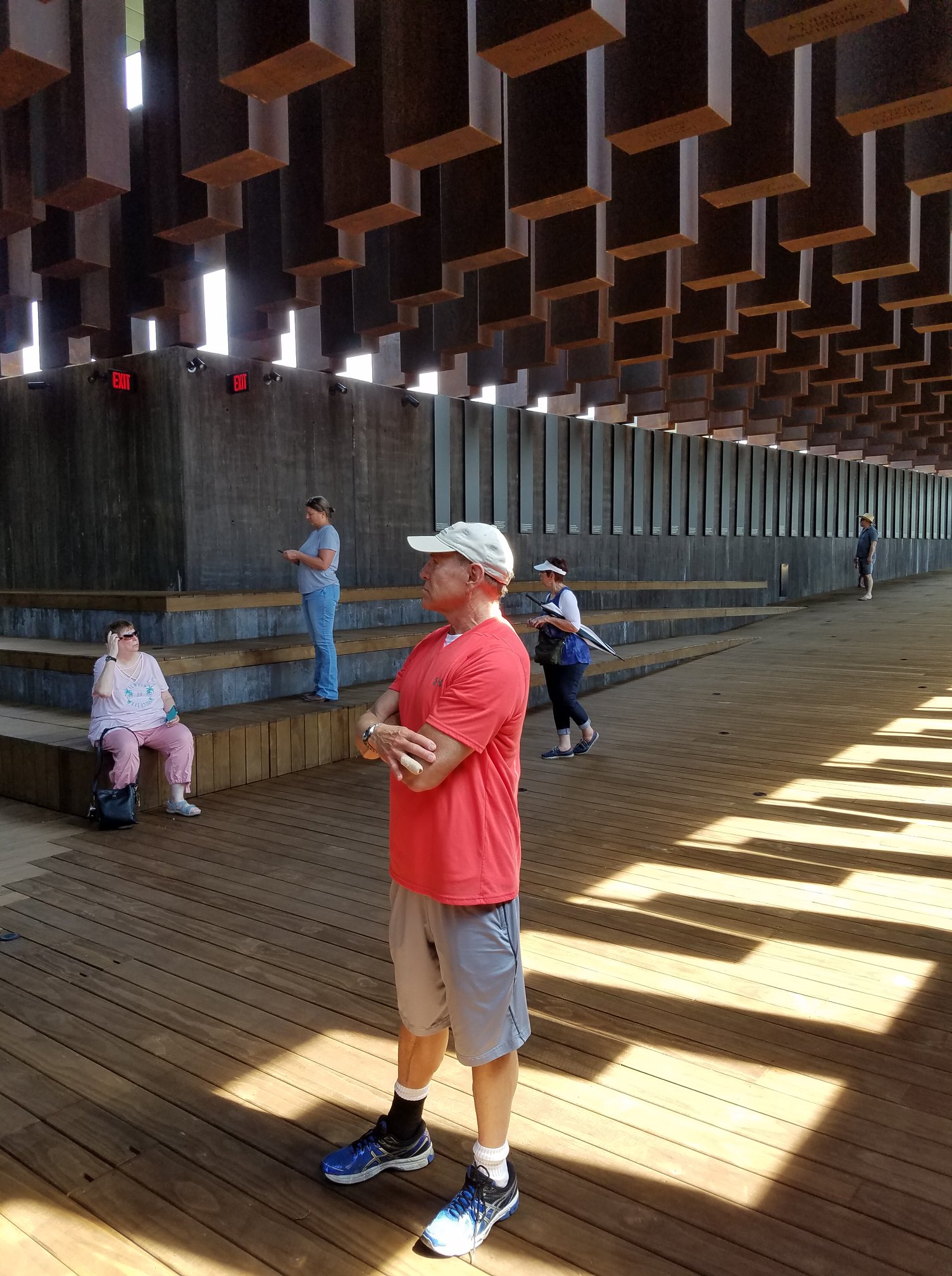
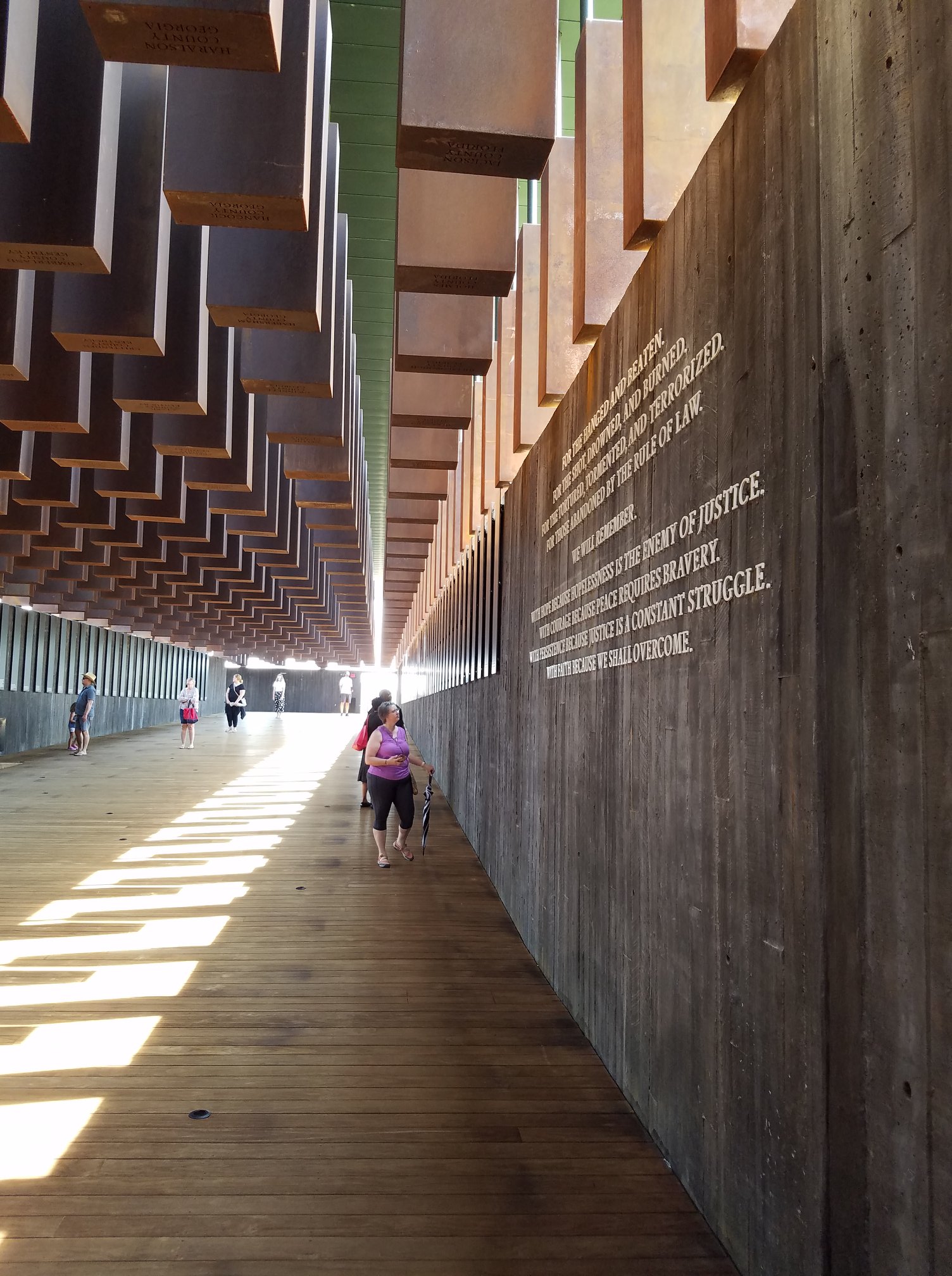
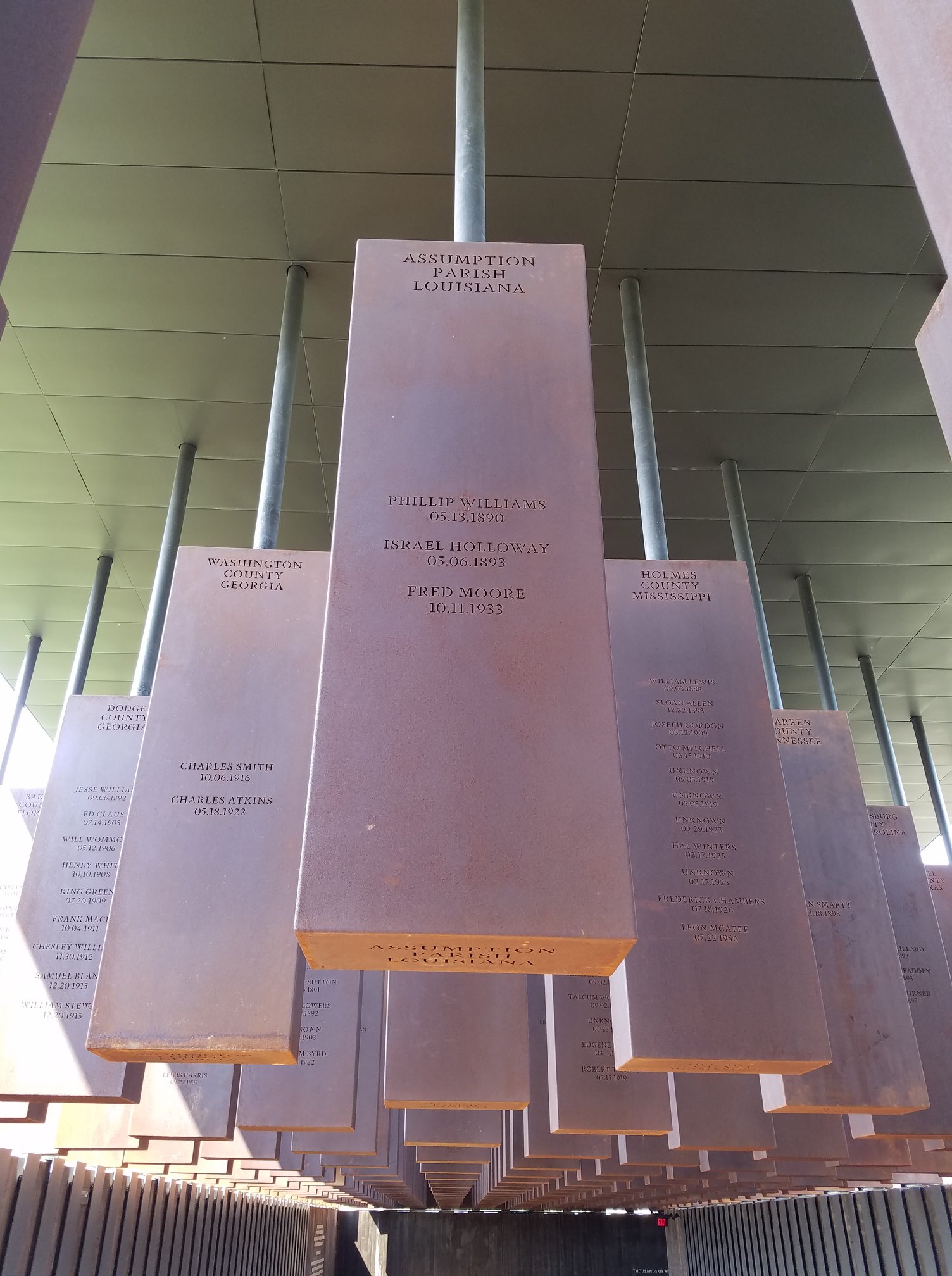
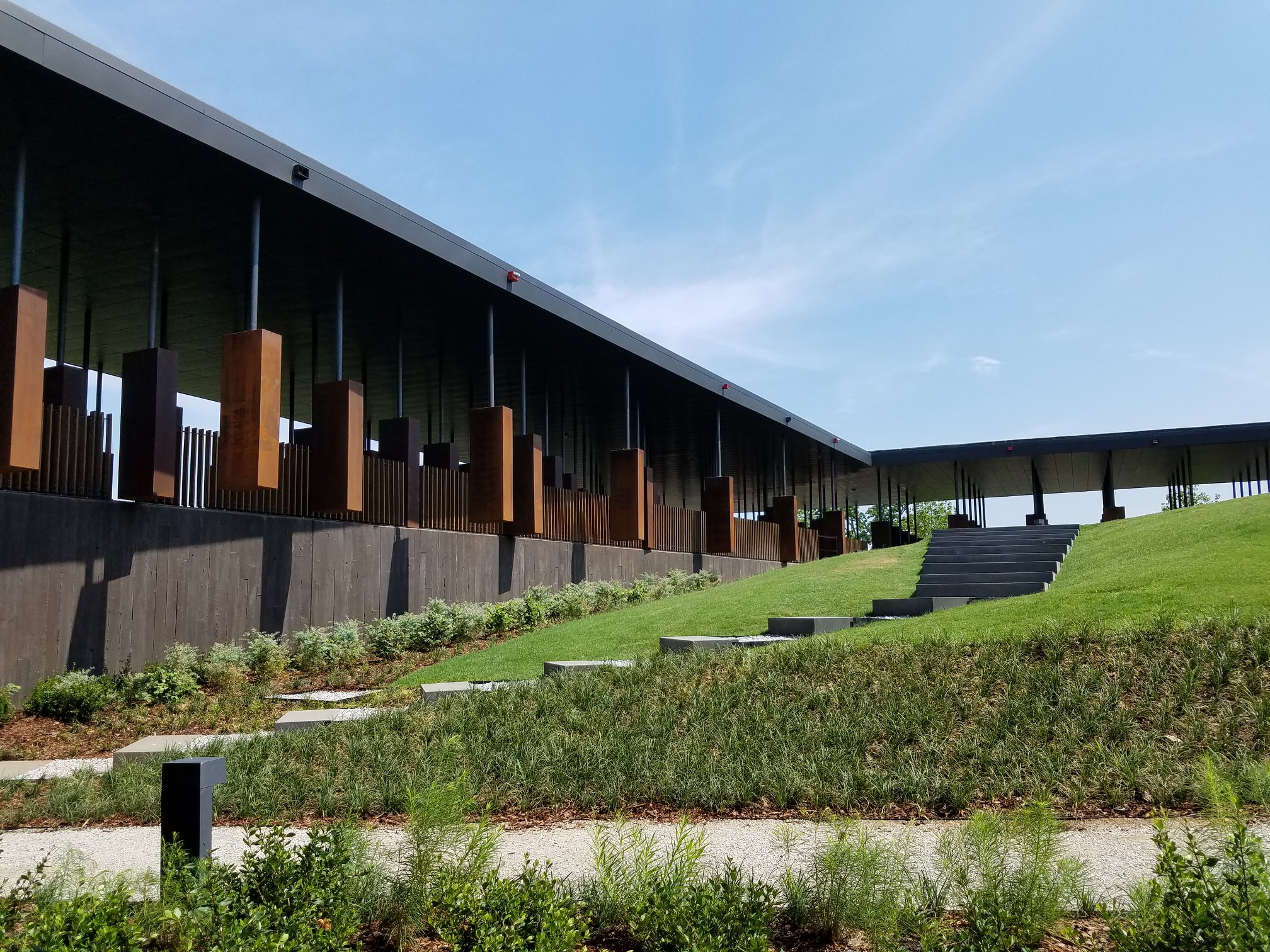
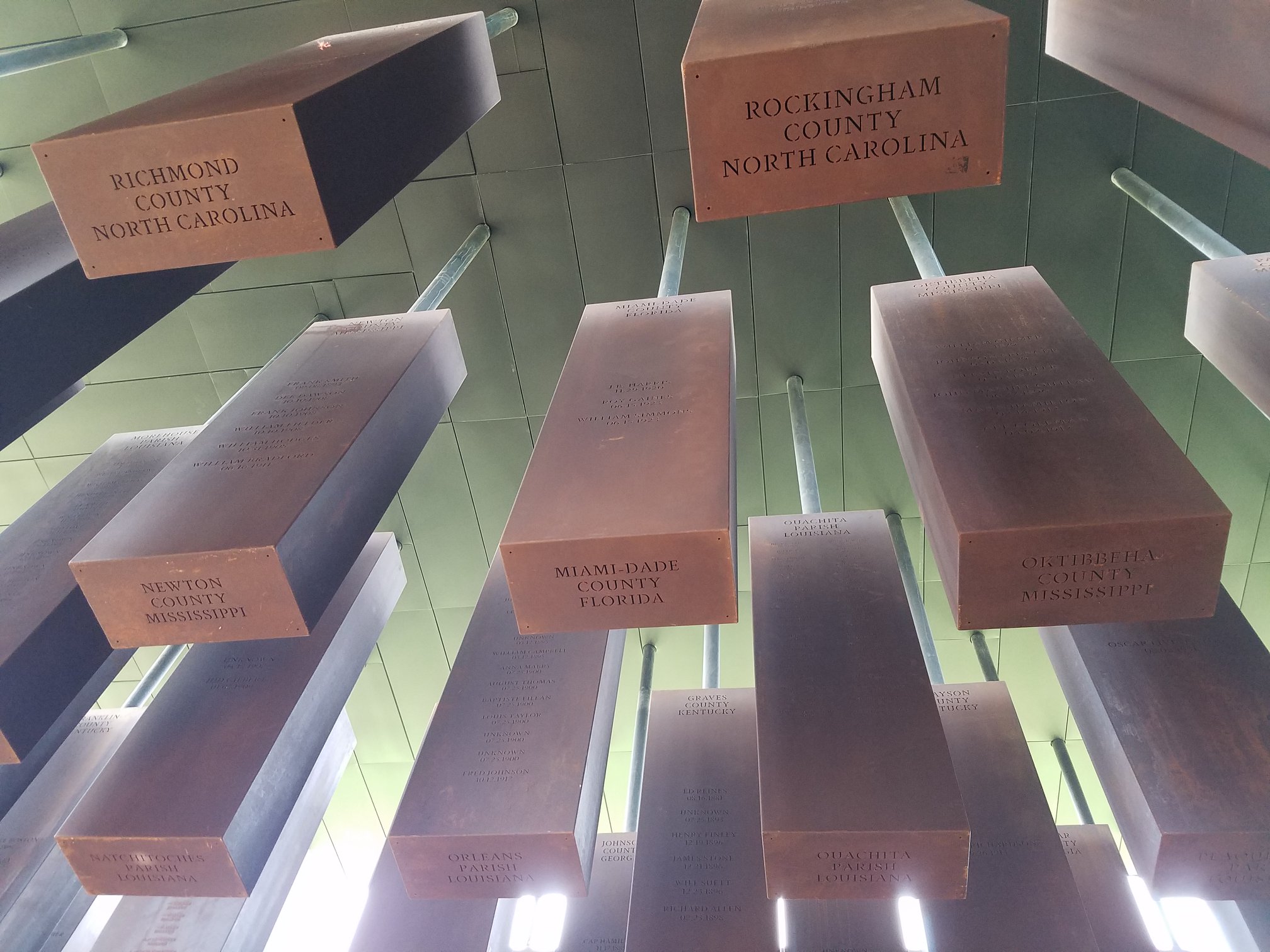
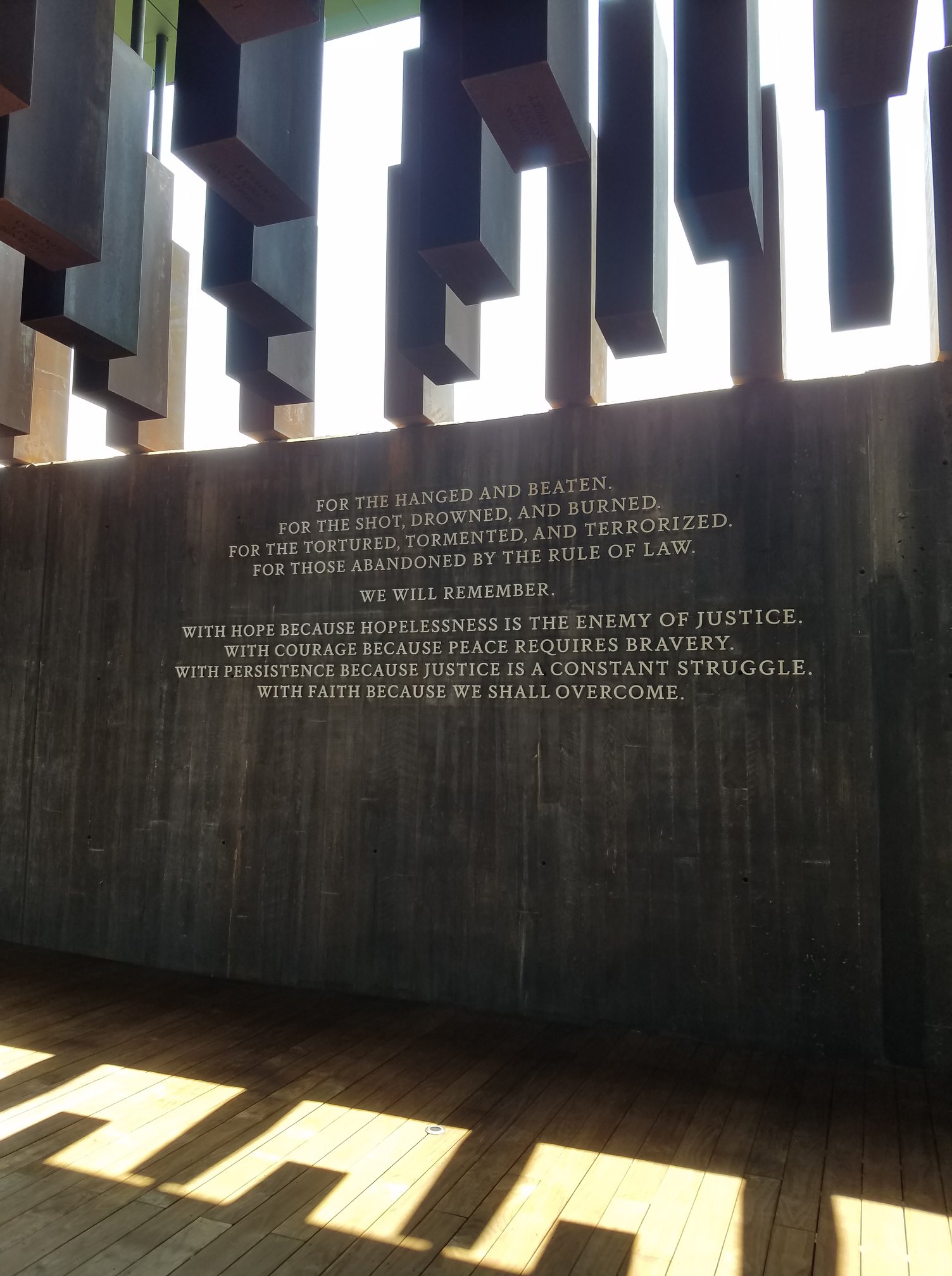
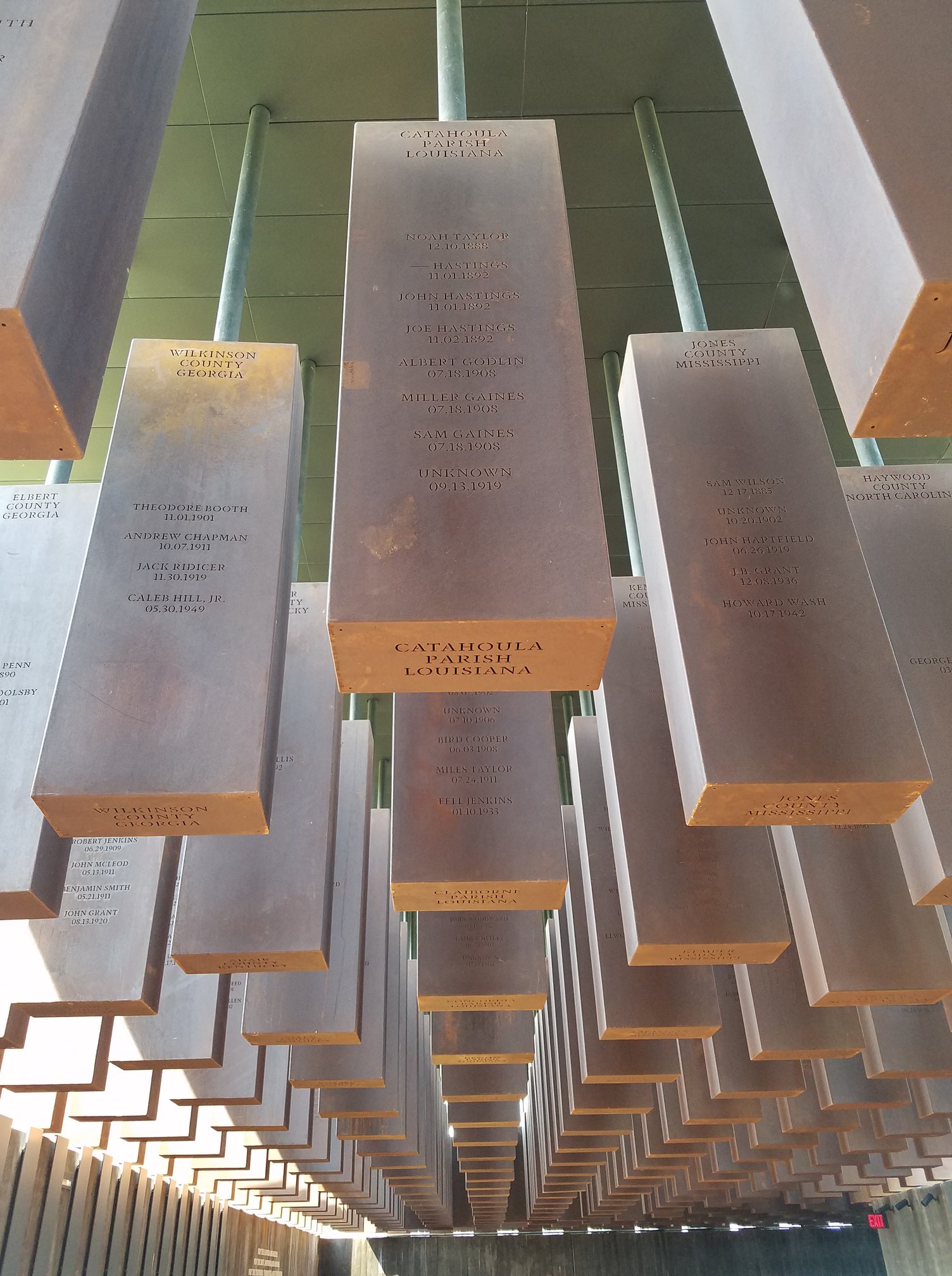
The memorial creates a gripping architectural geometry from 800 metal boxes that hang from its sprawling ceiling. They have the quality of tombstones that descend from above.
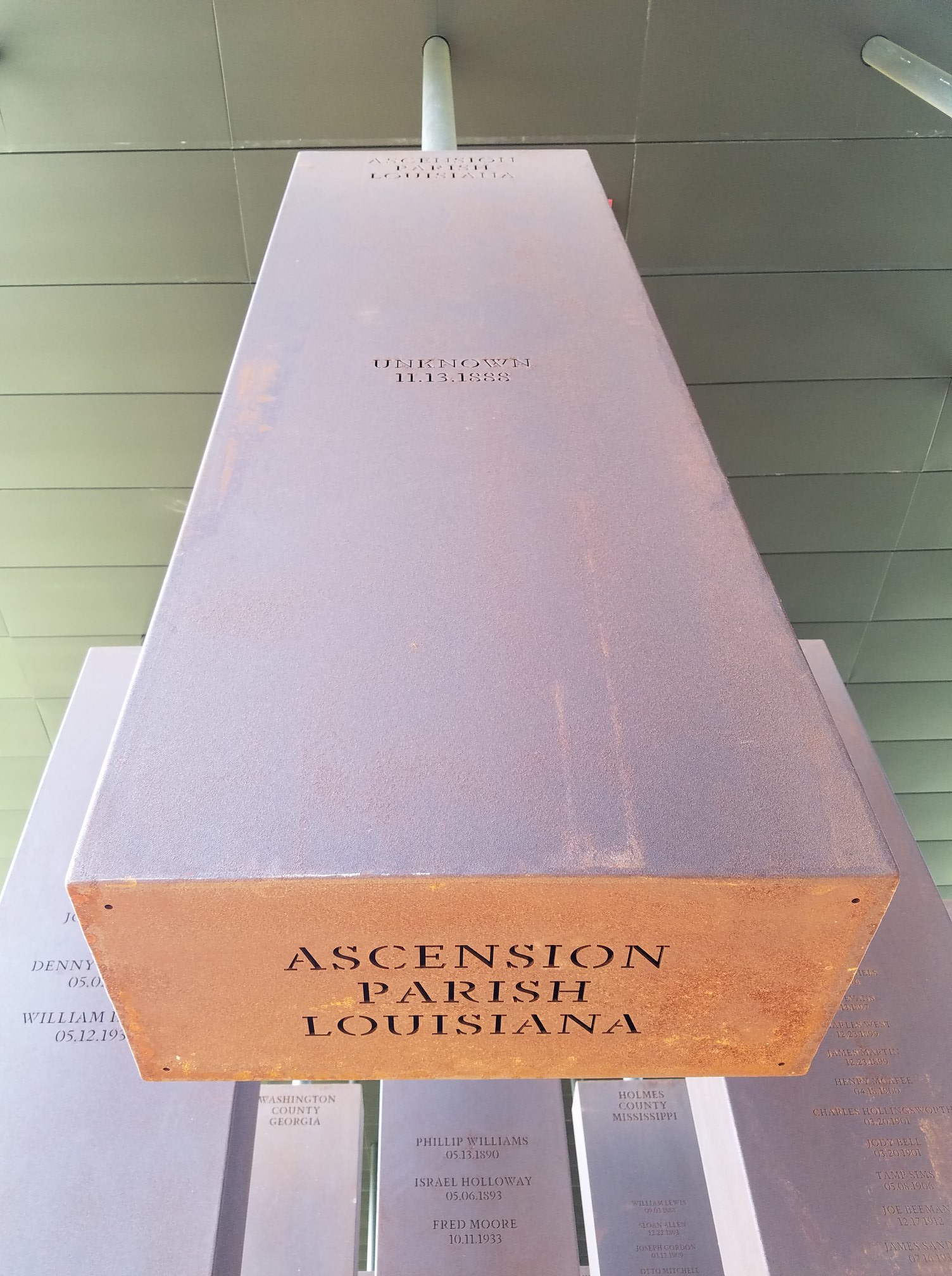
Each one represents a county, a parish, or another place where lynchings or other racial violence occurred.
Their rusty metal has a blankness that spares us the photographic evidence of America’s peculiar form of racial terror. Visitors see none of the things Billie Holiday sang about in her haunting dissonant jazz song, “Strange Fruit.”
Hanging over visitors’ heads inside the memorial there are only the stark boxes etched with the place and the names of those who were lynched and the dates they died.
Matching boxes lie on the ground outside the building like coffins, waiting to be claimed for local monuments in each one of the counties named on them.
No hint is there of the bulging eyes and twisted mouths or the rope tight like a crease in the neck. We are spared the other graphic images Holiday intoned in her famous song:
“Here is the fruit for the crows to pluck. For the rain to gather. For the wind to suck. For the sun to rot. For the trees to drop. Here is a strange and bitter crop.”
And now here in Montgomery, the watchful eyes of Jefferson Davis look out toward these metal sentinels as he stands amid his magnolia trees. He stares toward them while guarding a stately white capitol full of memories of the gallant South.
The scent of magnolia that surrounds him was sweet and fresh when Jim and I visited. Its perfume drifted downward, as did his statue’s eyes. Down toward Court Square Fountain, where slaves once marched up from the Alabama River to be bought and sold.
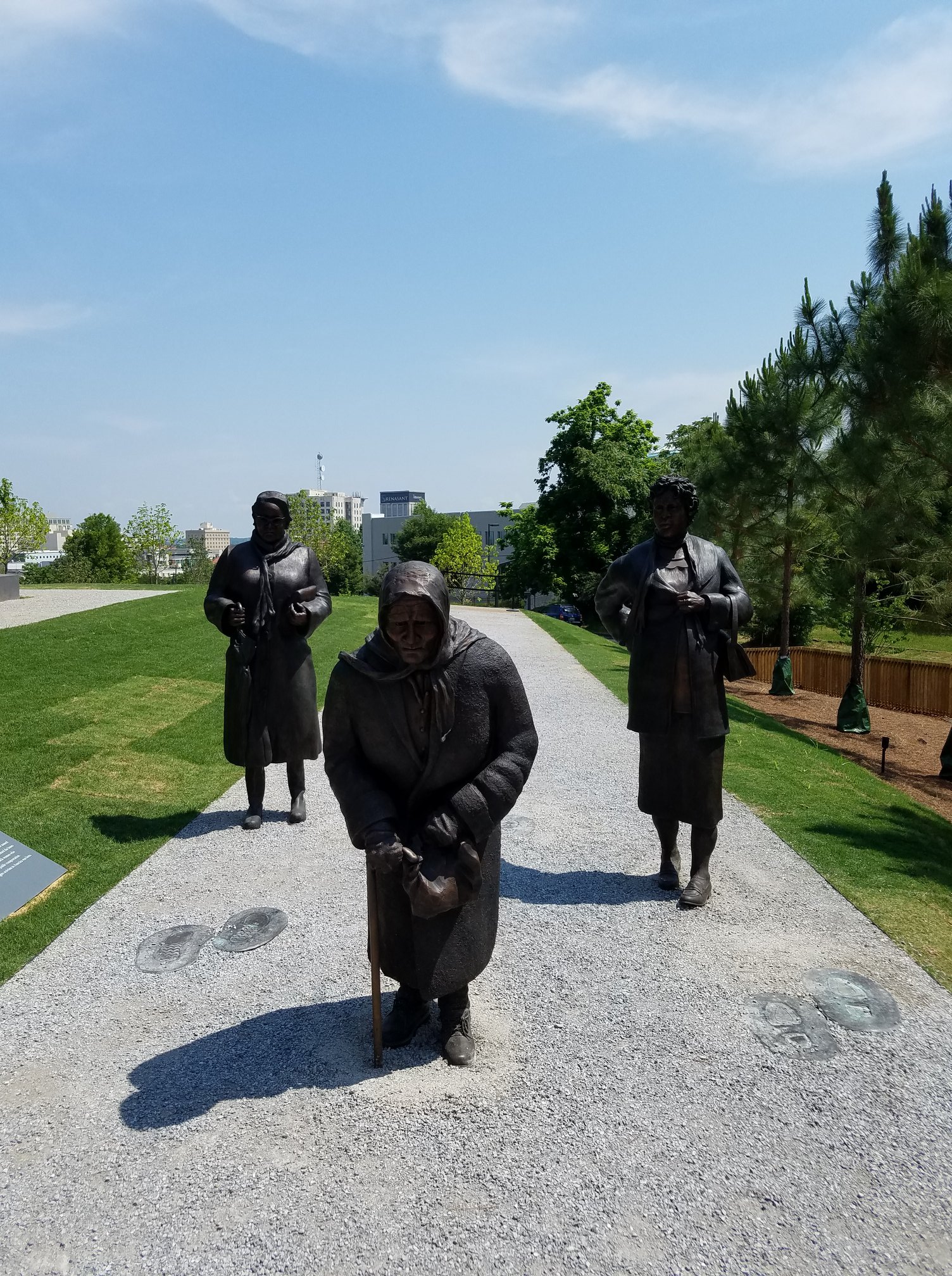
His statue looks out over memorials to Rosa Parks and the Freedom Riders. Out past the church where Rev. Martin Luther King Jr. preached. Out past the stops where buses ran empty in a boycott that launched the modern Civil Rights movement.
And those fixed statesman eyes look on to the next hill over, where memories of strange fruit hang there in the Southern breeze. https://bit.ly/2IxsHzG
 Robert Craig Waters